Will Future Generations Still Need Garage Doors?
Home | Will Future Generations Still Need Garage Doors?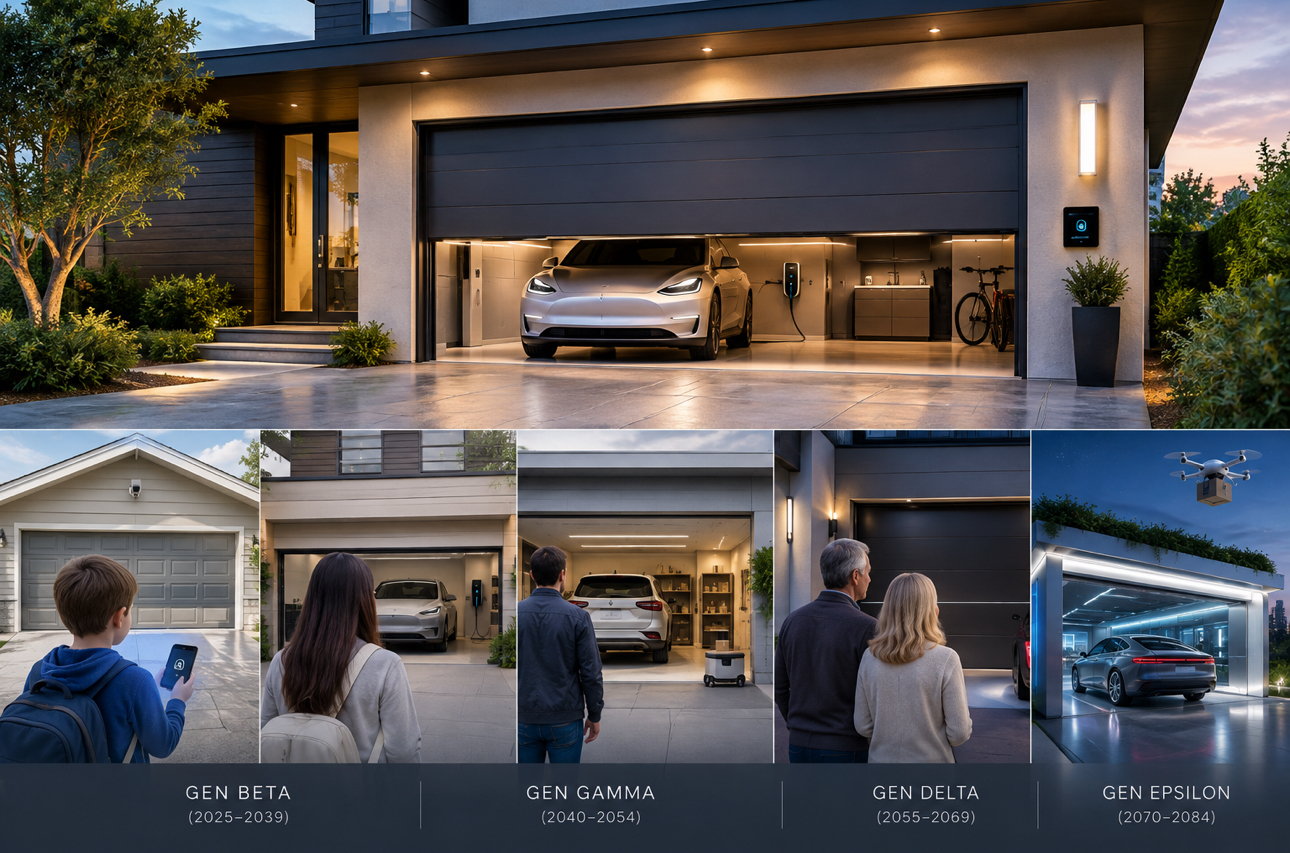
Garage doors are unlikely to disappear with the arrival of Gen Beta, Gen Gamma, and the generations that follow. However, the way people think about garages may change significantly. For younger generations, a garage door may need to provide much more than a way to open and close a garage.
Gen Beta, born approximately from 2025 to 2039, will grow up surrounded by smart homes. Safety, convenience, and technology will probably be major priorities. Garage doors may be expected to connect automatically with home security systems, cameras, smartphones, and other smart devices. For this generation, remote monitoring and automatic safety features could be just as important as the door itself.
Gen Gamma, approximately 2040–2054, may have an even different relationship with the traditional garage. Electric vehicles, autonomous vehicles, delivery systems, and smaller living spaces could change how garages are used. A garage may become a multifunctional space for storage, charging, deliveries, or other household needs. Design will also matter. Homeowners may want garage doors that blend into the architecture rather than looking like a separate mechanical feature.
For Gen Delta, approximately 2055–2069, practicality may become closely connected with automation. If vehicles can park themselves and homes can recognize residents automatically, manually operating a garage door may seem outdated. At the same time, reliable emergency operation and strong security will remain essential.
By the time Gen Epsilon, approximately 2070–2084, becomes the primary generation of homeowners, the traditional garage may look very different. Some homes may not have garages at all, while others may use highly automated enclosed spaces for vehicles, deliveries, equipment, or storage.
One thing is likely to remain constant: people will want their homes and belongings to be protected. Whether garage doors become smarter, more discreet, more energy-efficient, or completely automated, security, safety, durability, and practical design will continue to matter.